

Climate Risk in Island Fragility
Snapshot: Population ~10.5 million | GDP per capita ~US$3,200 | Fragility context: Climate- vulnerable island state | Region: Pacific
Integrated Context
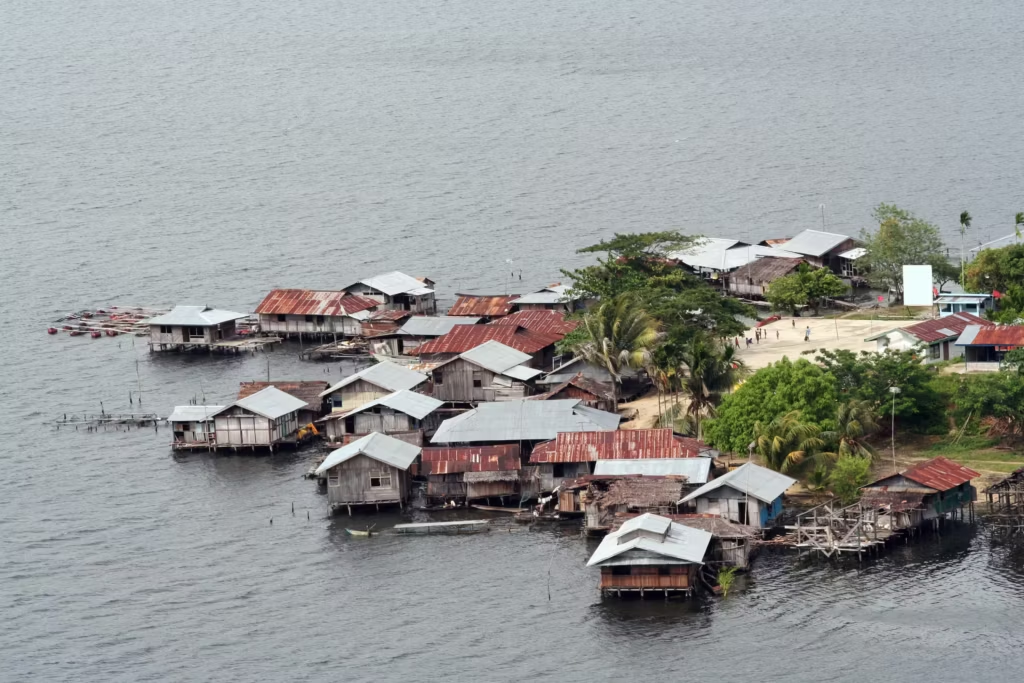
Papua New Guinea faces a complex set of climate risks shaped by its geography, ecological richness, and dispersed population. Rising sea levels, coastal erosion, intense rainfall, and landslides are already affecting communities particularly those living along low-lying coasts and in remote highland areas. Many of these communities have limited access to infrastructure and public services, which increases their exposure to climate shocks and slows recovery when disasters occur. At the same time, Papua New Guinea is home to some of the world’s most diverse ecosystems, which underpin livelihoods, food systems, and cultural identity. Forests, coral reefs, and coastal ecosystems support subsistence agriculture and fisheries, but they are increasingly under pressure from climate change. Coral bleaching, forest degradation, and more frequent extreme weather events are affecting both biodiversity and the communities that depend on it. In this context, adaptation is closely tied to strengthening local systems. Building resilience will require practical, community-based approaches that combine ecosystem conservation with improved disaster preparedness and locally appropriate governance. Given the country’s geographic and institutional realities, solutions need to be flexible, decentralized, and rooted in local knowledge.
Key Climate and Environmental Challenges
• Sea-level rise and accelerating coastal erosion
• Extreme rainfall events and landslide risks
• Biodiversity loss and increasing ecosystem stress
• Limited infrastructure and service delivery in remote areas
GCCED Engagement Priorities
• Strengthening coastal resilience and relocation planning where needed
• Expanding ecosystem-based adaptation and conservation programs
• Enhancing community-level disaster preparedness and response
• Supporting sustainable forest and marine resource governance
Strategic Note
Papua New Guinea’s resilience will depend on how effectively it protects its ecosystems while strengthening the capacity of communities to adapt to a changing climate. Locally driven, ecosystem-based approaches—supported by stronger governance and targeted investments—will be essential to sustaining livelihoods and reducing long-term vulnerability.
SDG Alignment: 13 • 14 • 15
Key Challenges:
- Sea-level rise and erosion
- Cyclones and food insecurity
- Limited governance capacity
GCCED Priorities:
- Coastal resilience programs
- Community relocation planning
- Ecosystem-based adaptation